

Our peak honey flow in northern Minnesota just wrapped up, and we are looking at a true bumper crop.
Even with just 4 production hives in our yard this year, these bees went to work. They packed out 13 supers!
Here’s how we're managing another mess-free harvest this season, with a few new tactics:
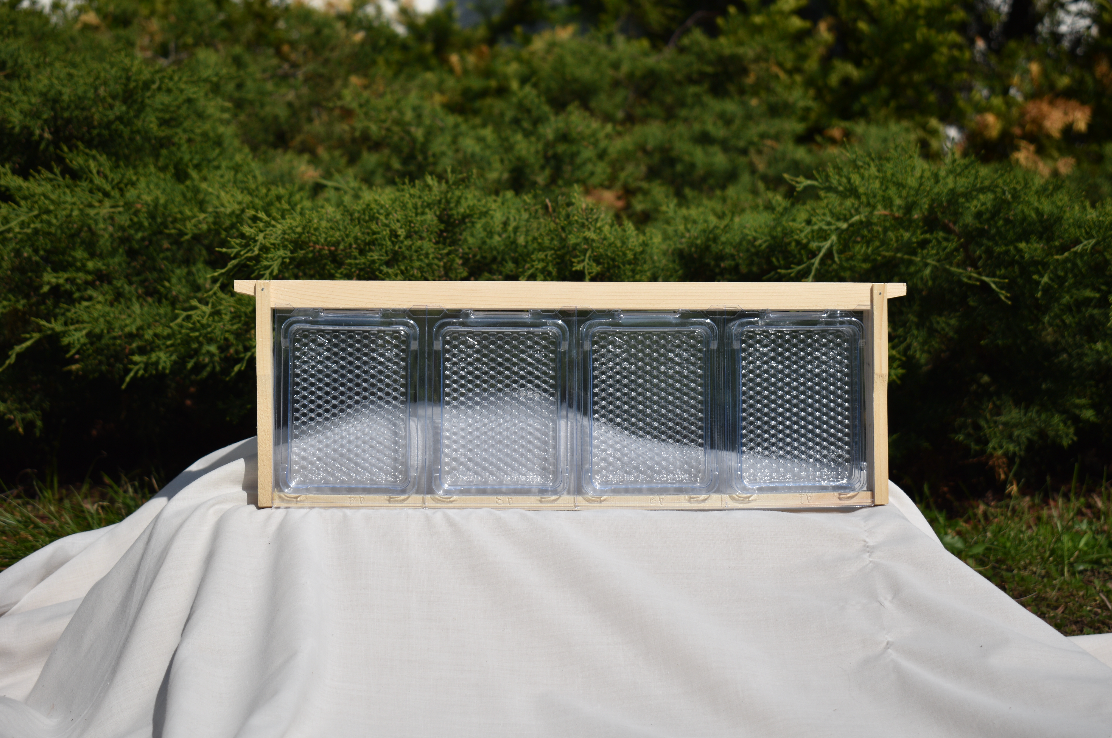
Out of the 13 supers, we ran 4 deep boxes with Flow frames for liquid honey, 2 mediums of our new 21st Bee molded plastic frames, and 7 mediums made up of a combination of SimplKomb and some other experimental products we are working on (exciting developments!).
Liquid honey
I devised a hose system to funnel the honey into a 5 gallon bucket to harvest our liquid honey without disrupting the colony or drowning any bees. By tilting the front of the hive up an inch with a hydraulic jack before cracking open the Flow frames, gravity does the heavy lifting. Enjoyin' a cold lemonade for a couple hours in the shade sure beats cranking a spinner!


Comb honey
As for our medium supers, we stack them on top of triangle escape boards for a couple of days. These act as a sort of one-way trapdoor, and it works quite well to remove all of the bees without using any fume boards or brushing off individual frames.
Finally, those boxes will go into the freezer to kill any potential wax moth larvae in the comb honey before we harvest.
Speaking of freezing… Minnesota’s first frost is looming. Next week, we’ll begin configuring the hives for overwintering already.
What’s on the agenda:
- We start with checking for mites and making sure every queen is healthy.
- Then, we’ll stack the deep frames for the fall nectar flow, where each colony will get two brood boxes. Our goal is 200 lbs of weight per colony so they have enough to last all winter.
- Once we hit that target weight, we’ll stack the four, 5-frame vertical boxes side-by-side, with the brood at the bottom and honey all the way up.
- This creates a large cube of boxes, which we will then insulate on the sides and top. Grouping them together allows the colonies to share body heat and have the least exposed surface area possible.
- For good measure, we’ll staple a 1/4” mesh hardware cloth over the entrances to protect against mice, and the front of the block is angled Southeast to soak as much Minnesota winter sunlight as possible.

As always, if we can answer any questions or otherwise be a resource, reach out to us. We’re happy to help.
Happy harvesting!