

It's been an experimental summer so far.
Up here in North Central Minnesota, we’re using our apiary as an experimental testing ground where we try out many different approaches to beekeeping. Most recently, we’ve added thermographic imagery to our arsenal.
Read on for a tour through our process so far this year!
The Fry Family Farms setup
Our current setup ranges from traditional wooden Langstroth hives to long lang horizontal hives, one HIIVE, and even a Slovenian-style bee house. This year, we are running three high-quality Randy Oliver Golden West queens in insulated boxes at the farm.
They were started as nucs back in April while there was still snow on the ground. Two of these colonies are in insulated HiveIQ single brood boxes, and the third is in a Primal Hive. That third hive actually houses bees from two combined starter colonies, due to an unfortunate incident with a queen during installation, if you remember that fiasco from our May newsletter...
Giving the bees a head start
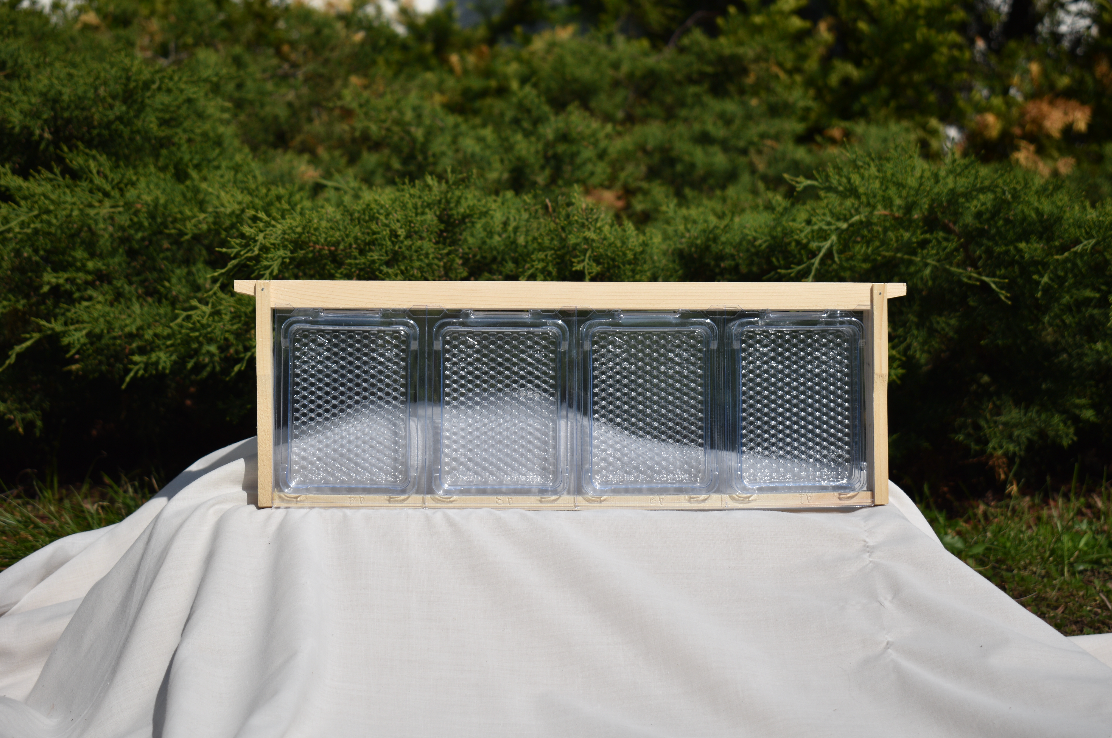
We start our SimplKomb under feed (we feed them sugar syrup right away). This gives the colonies the time and energy they need to explore, clean up, and build out their wax comb into the SimplKomb cassettes before the natural nectar flow starts in summer.
This photo from May 21st shows the first two colonies after four weeks of feeding. We recently reconfigured them by placing a single wooden super filled with the SimplKomb underneath a feeder, all sitting inside a BeeMax insulated box.

Reading the thermal imagery
The thermographic photo below shows exactly how much heat is lost through the wooden super boxes compared to the HiveIQ styrofoam brood boxes.


When this was taken, the outside air temperature was just below 30°F. The colony on the right appears quite a bit stronger than the one on the left—or at least, there are many more bees up in the wooden box. Notice how heat escapes even around the sides of the baseboard and the handle depressions on the insulated boxes.
These colonies stand in sharp contrast to the Primal Hive, pictured on the far right of the photo above. This hive towers above the other two, yet it shows a stone-cold heat signature over most of its body.
The thermal imagery showed a bright spot of heat exists at the lower entrance, registering at 59.1°F. Even its handle depressions seemed cooler than the HiveIQ boxes.
Learning in real time
As lifelong learners, beekeepers typically read as much as they can about new techniques and equipment. For me, while scientific studies, white papers, and articles are great, a picture is worth a thousand words.
These thermographs have helped us visualize the actual, real-time conditions our bees face inside our equipment. Having access to this information allows us to react quickly, whether by changing equipment, adjusting the hive setup, or moving things around to provide the best possible conditions for our bees.
Wishing you a wonderful season,
Mick